
How It Works
Havn transforms trusted data into insight—without surveillance or profiling.
Real security requires real transparency.
Havn gives Security, HR, and employees a shared understanding of the same relationship data — before and during analysis, not after decisions are made or never at all

1. Employees Get Real Buy In
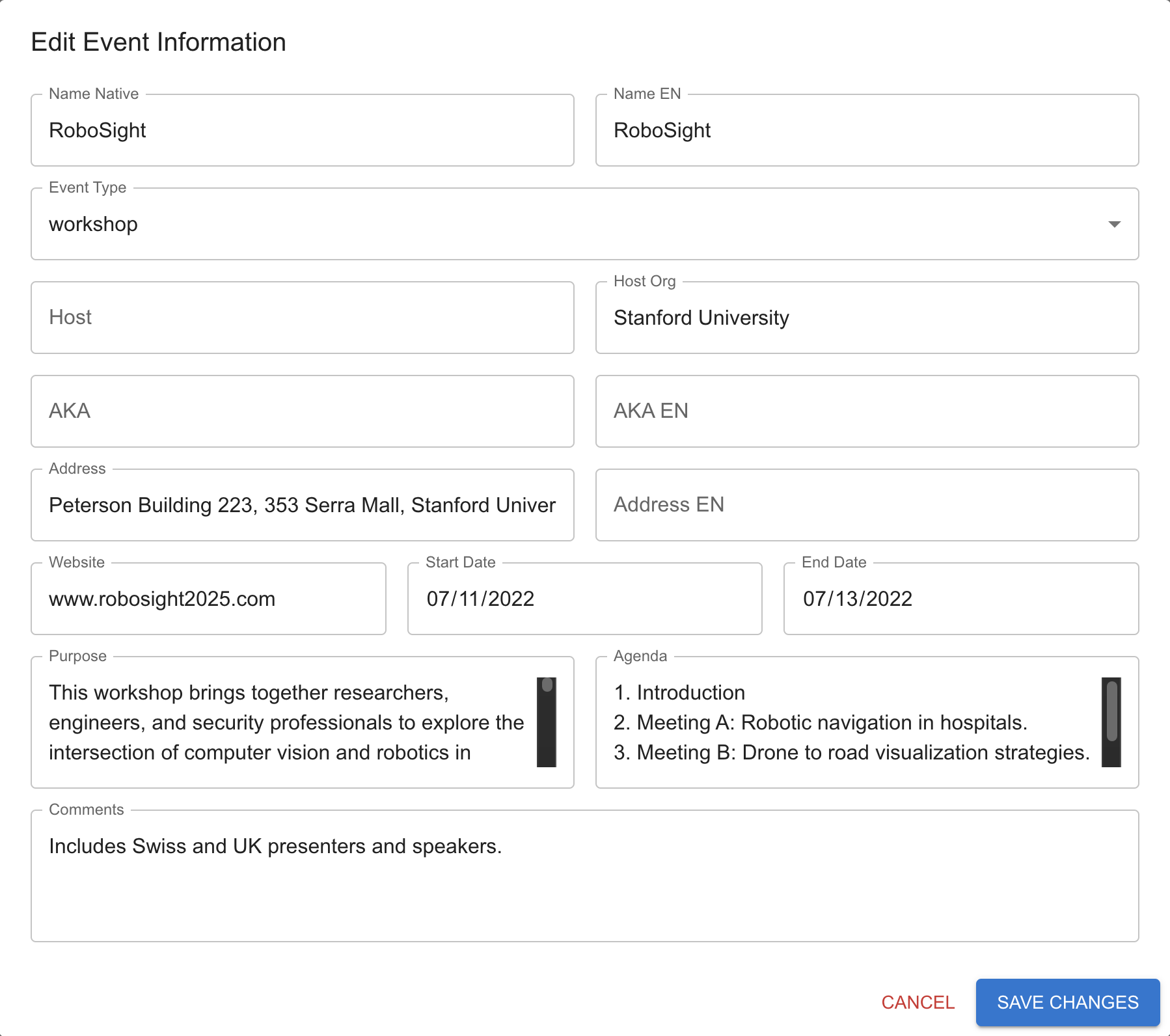
Before analysis begins, employees in IP-sensitive roles see exactly what relationship data we analyze and why: co-authorships, conference attendance, institutional affiliations. We offer upfront transparency and no surprises.
2. We Analyze Relationship Patterns, Not Personal Content
Our platform processes professional networks to detect anomalies that may indicate systematic recruitment or cultivation attempts—unusual patterns of institutional connections, sudden relationship changes with entities of concern, sustained engagement that deviates from normal collaboration.
3. Expert Analysts Provide Context
Linguists and regional specialists review flagged patterns to distinguish normal international collaboration from potential cultivation or recruitment operations. This human layer reduces false positives, protects against AI hallucinations, and catches cultural nuances that automation misses.
4. Findings Are Transparent and Contestable
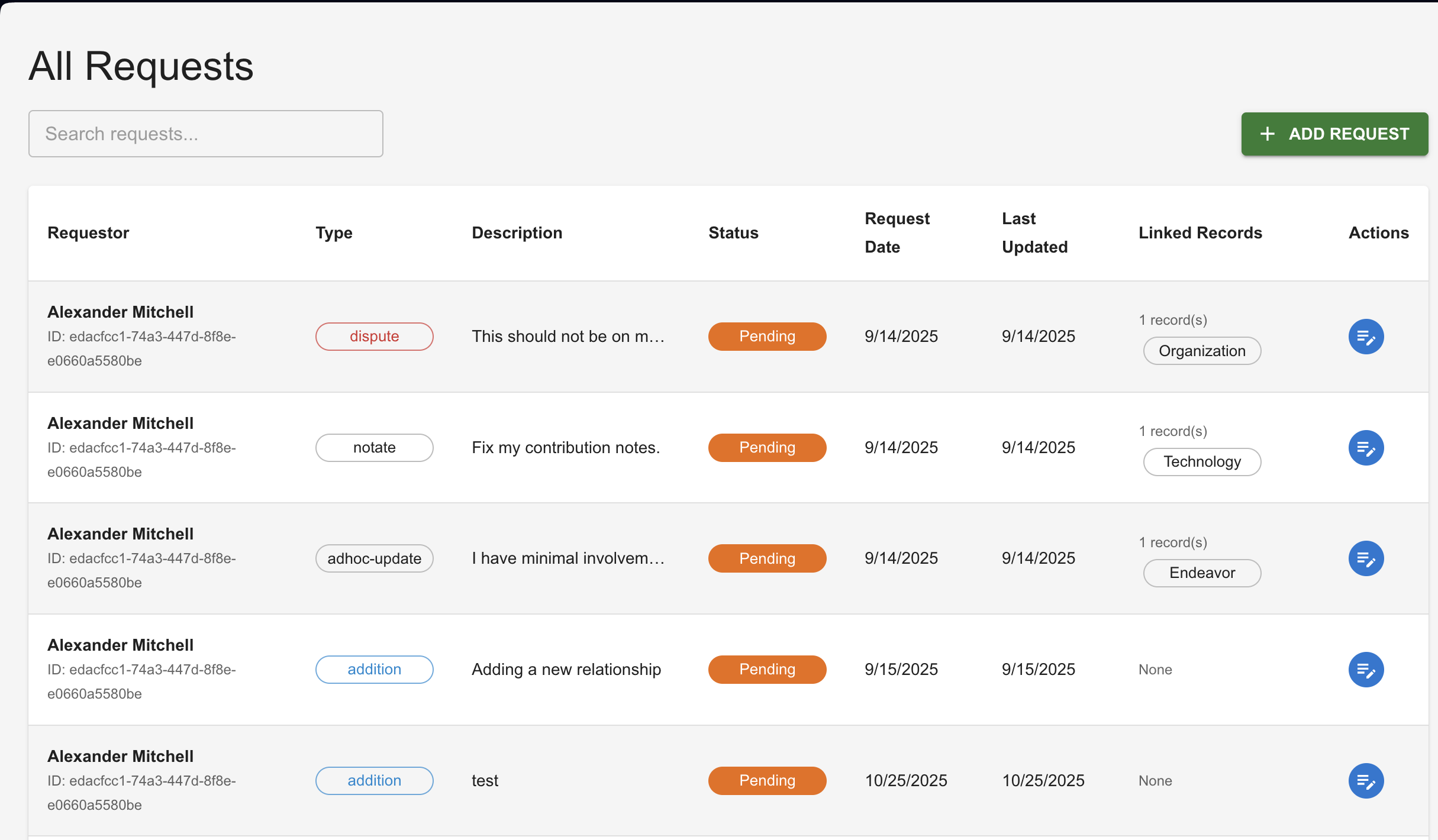
When the system flags an anomaly, the employee sees it and can provide corrections and context. The system learns from these corrections. Security and HR teams access findings through secure dashboards with full audit trails.
THINK OF IT LIKE A SECURITY CLEARANCE
—BUT TRANSPARENT
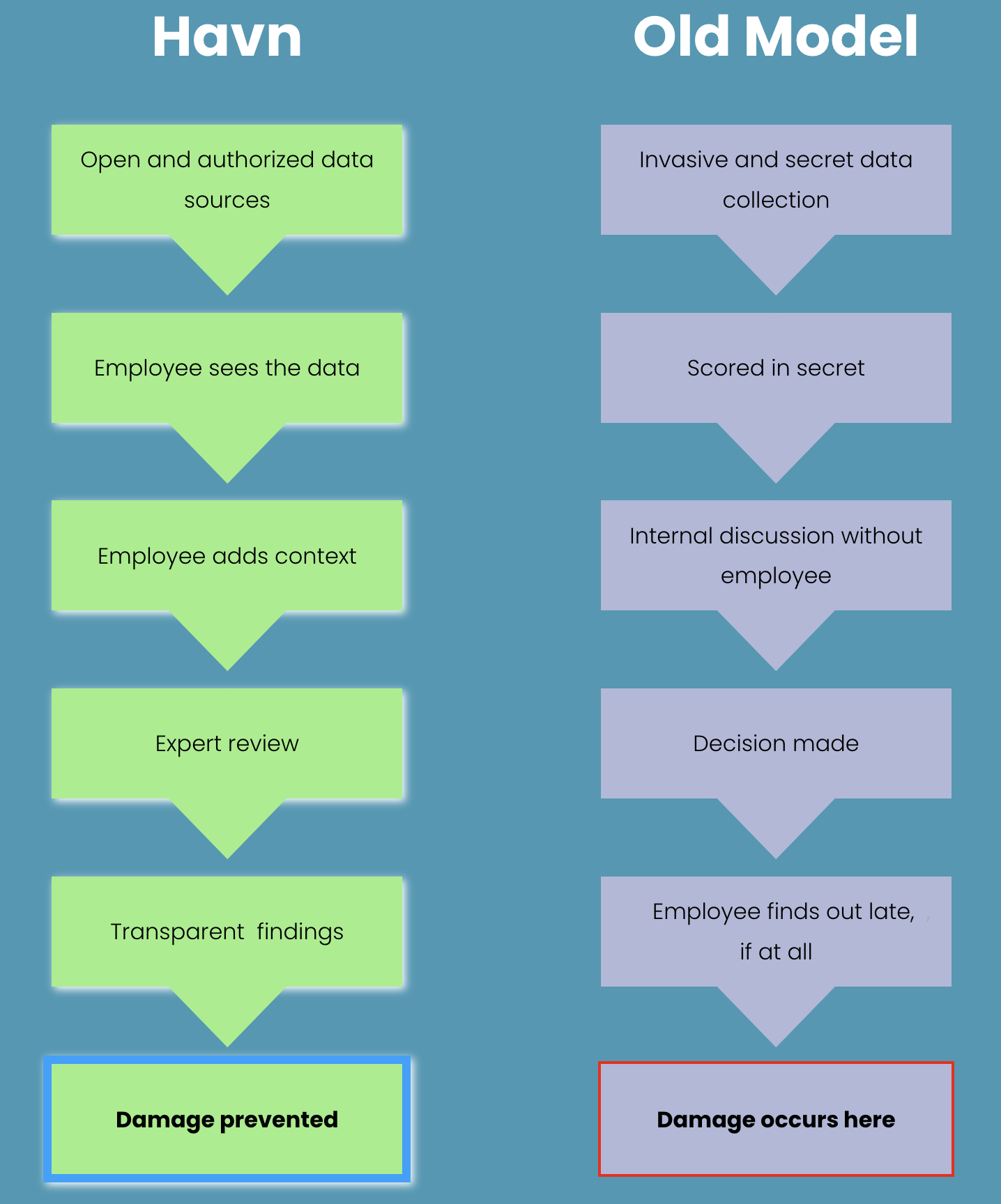
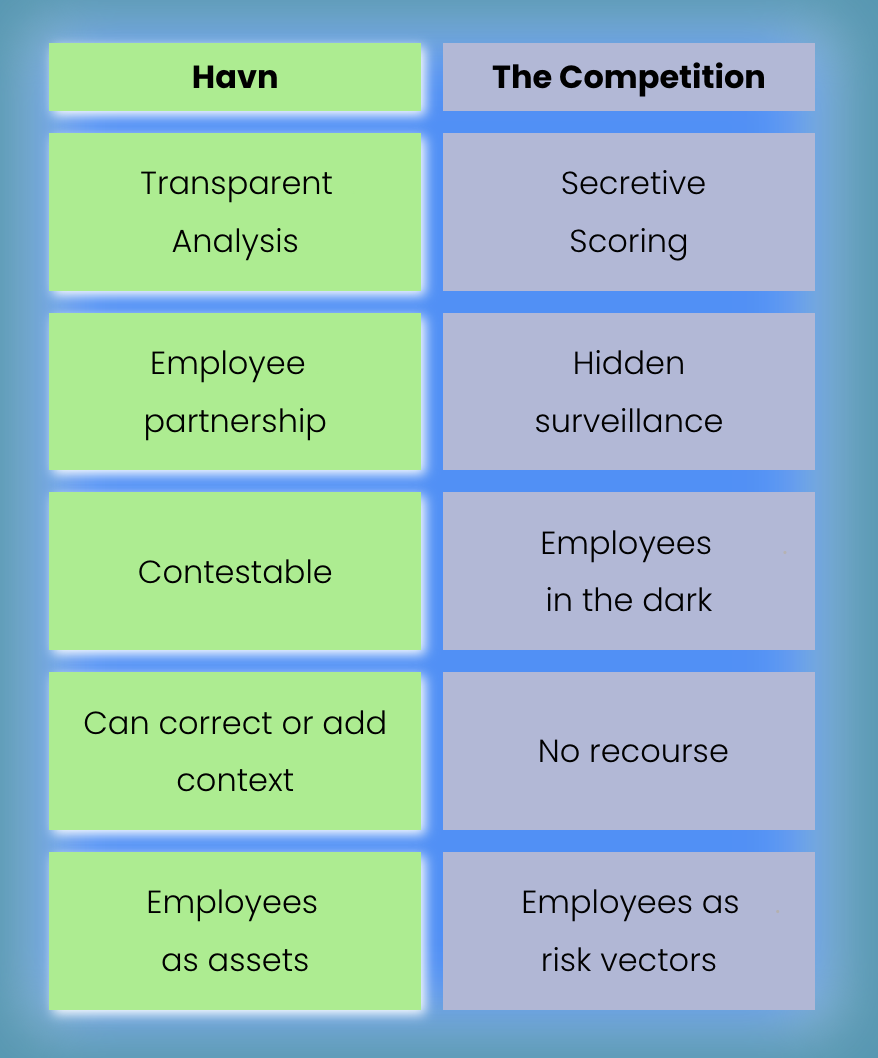
Most security processes—in government and in companies—share the same fatal flaw: over-reliance on secretive and invasive collection, which means context arrives too late to prevent misinterpretation, or never arrives at all. By the time employees can explain—if they're ever given the chance—conclusions are already drawn and reputations are damaged. Havn flips the model: transparency before and during analysis, not after, or never. For decades, security clearances have protected classified information by vetting relationships before granting access. Havn brings the same principle to commercial IP— with modern transparency and fairness. Like security clearances, Havn is role-based—required for positions with IP access. Unlike clearances, the analysis isn't a black box. When our system flags a relationship pattern or anomaly, employees see the finding and can provide context before any action is taken. Traditional clearance investigations hide their findings. Havn makes them transparent and contestable. It's access control that treats employees as partners, not subjects.
Technology
Havn runs on secure, scalable cloud infrastructure designed for high-volume relationship data processing.
Our platform provides:
Privacy – No behavioral monitoring or personal content surveillance
Transparency – Full audit trails and explainable findings Integration – dashboard access for CISOs, HR, compliance. and employees.
Security – Encrypted storage, zero-trust architecture
Expert Review – Human analysts with deep knowledge of worldwide languages and cultures, who also provide continuing education to security teams about emerging foreign-influence tradecraft and regional threat patterns
The combination of automated pattern detection and expert analysis delivers accuracy and cultural context that pure automation cannot match.

Built for Today’s Reality
Companies building transformative technology face sophisticated recruitment operations—systematic, multi-year cultivation efforts that target employees with strategic IP access. Traditional security responses (surveillance, nationality-based restrictions) alienate the international talent driving innovation.
Detecting sophisticated recruitment in global organizations requires understanding regional academic networks, institutional affiliations, and professional norms across cultures.
Havn makes it possible to address legitimate security concerns without profiling, monitoring, or creating a culture of suspicion. Whether your team works with partners in Beijing or Boston—we understand the context.